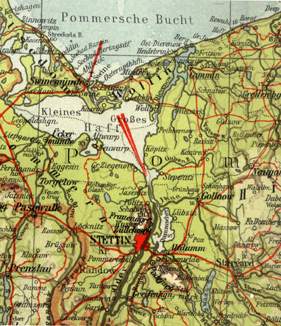
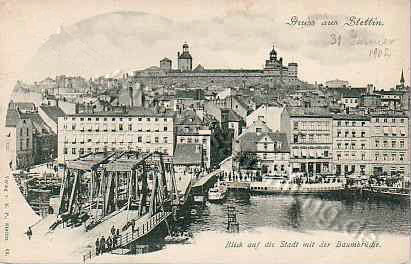
In this conflict both Prussia and Austria had massive problems supplying their armies, the troups of both contries marched to and fro without any considerabel fighting in Bohemia (western part of Czechia) and struggeld with each other to get some potatoes out of the acres. Of couse, the Austrians remembered more the big pain they got in their stomachs; they called this conflict plum biting ... When I concider this it seems a pretty mystery to me how my brave ancestor was able to fall in Prussian hand between the invasion of the Prussians in Bohemia on 5. Juli and the end of 1788 - but at least he got not killed by a disease, like 1500 soldiers of both sides. To me it seemes clear Baldassare had not got an impression too bad from his soldiers life, as he decidet to serve as Prussian soldier and after some years established himself as sculptorer in Stettin (Pomerania). Known as part of his work are only a very considerable upper part of an altar and the organ in the church of Kremzow in the region of Pyritz (eastern Pomerania, today only its shell still exists). By the way descendant of him with the name San Galli now live in France near Paris - their ancestors fled from the communists in Russia; I´ve visiteted them there in 1993.
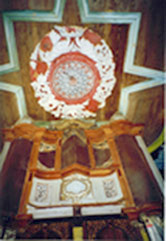
The right, considerable upper part of the altar from1799 shows "in his middle part painted with oil shows the resurrection of Christ, above the prophet Jonas spit to land by the whale, at the top two angels". I´m sorry I could get only a picture of the empty outside of the organ, but I think, the wood-work over it should be made by Balthasar Sangalli too - working with wood and "laque" were his speciality.
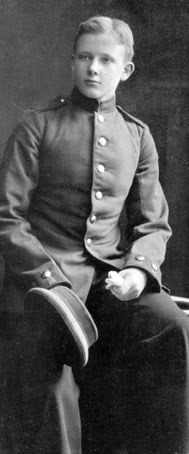
later Karl Sangalli fought
as West Prussian Ulan (lance rider)
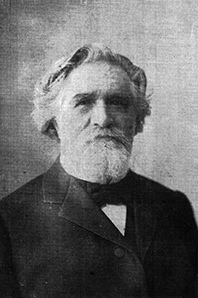
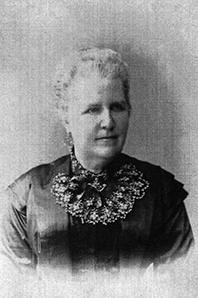
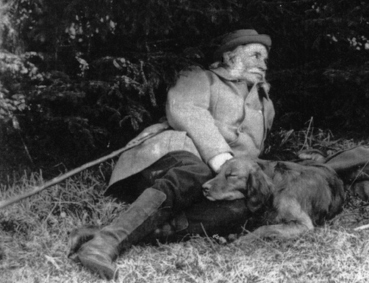
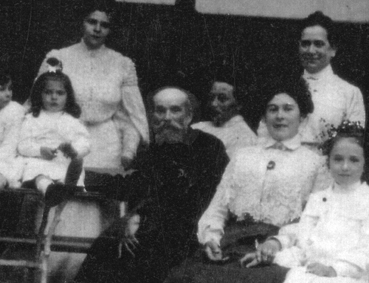
(supervision of securances) in Berlin and became my grand-grandmother like this. More to her here (in German). Pictures below: On the left Franz San Galli hunting, centrally "his wife", (I do hope that of Franz and not that of Robert), to the picture on the right side I red Robert San Galli - suddenly without hair and in a different position, if its true I think with his wife (watch her portrait above)
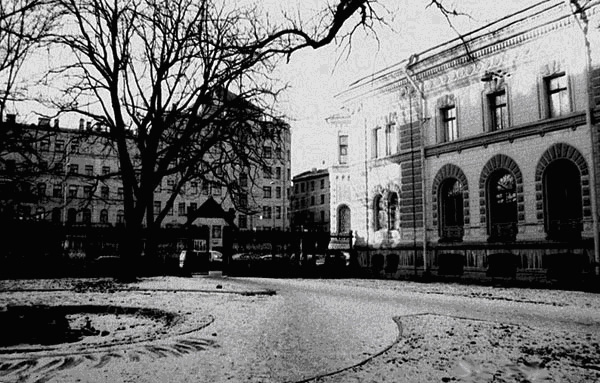
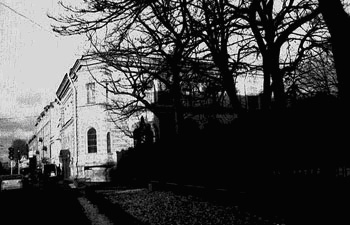
Franz San Galli had settled down with family and factory in the Ligovka - quarter near the center of St. Petersburg. Here his estate (Ligovsky) Prospekt 62. At the left the house to live im next to the park, at the right side the former office building.
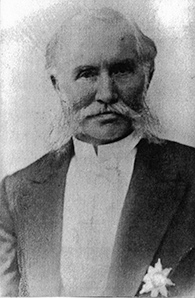
Nine years after his emigration to Saint Petersburg he married and foundet his own enterprise. First he built mostly metal covers for fireplaces and bathtubs. During the first years in spite of all efforts he didn´t make much money; but even now he let his yougest brother Robert San Galli follow him (the doughter of that brother got my grand-grandmother, more (in German) here). Only since he had sold the first low pressure water heating of russia to the Tzar and was recommmendet by the imperial administration his enterprise grew and got bigger and bigger; he built bridges, sold more to the emperial court and declaired: "I ´m a mill owner in Russia, known on the whole empire, and if they call the best names, my name is spoken too." With him I´m related by my grand-grand-grandfather, youngest brother of Franz - he died no earlier than 1920 after the Revolution, in exteme misery. Franz had let come three of his brothers, two of them went to america and married there, ome of them died there too, one in Coburg. Only my ancestor Robert San Galli stayed and helped for the rest of his life, mostly at economic problems. More then that, he worked in the management of other big firms too, like several insurances. Off cause there were real differences in the lives of the brothers. While Franz got a politician too since 1872 and until the abolician of the voting in three income classes in Russia became a very successfull leader of a political party, Robert as I understood took over work also in other enterprises and as an epert for the Russian state only in the 90s of the 19th century.
Like we all know, money doesn´t smell too bad. Franz San Gallis doughter Maria 1901 married Ludolf v. Boetticher (German nobility); by her I´m related to some members of the family v. Bismarck. Also todays inhabitants of St. Petersburg are proud of him, and one of them wrote into the web: After ca. 500 m from the Moscow trainstaition along the Ligovskij Prospekt in direction of Obvodnyj (Obvodny) chanel you´ll reach an oppulent neo-renaissance-palazzo on the left of the street, the palais San Galli. On the right of it you find the garden San Galli (in russian language Sad San Galli, in careless local slang its name became changed to Sengalievskij Sad hard to understand. Today this garden is a public park. It has a bad reputation as the most evil meeting place of the St. Petersburg drug addicted. That is simply like it is called often by the people of St. Petersburg. Franz San Galli had become wollknown for the production of fences, balconys and doors with a artisticly shape. He alsoproduced metal parts for bridges, docks of the marine und pumps for the supply of St. Petersburg. The area is known as Ligovka and a bit similar with Berlin Kreuzberg or Soho. By the turn from 19. to 20. century it was known for its firm reputation of bitter poverty, drinking and selling stolen goods there. Not only at night it was quite dangerous. Franz San Galli and his factory were a big exeption. "Ligovskaya blyad" (Ligovka-whore) got a firm term in Russian. And "What, cou´re comin from Ligovka?" means aproximately: "But you´re doing well?" On the other side it is easy from Ligovka with its central position to reach the winter palace as well as Moscow or Paris, because train stations and the international airport of St. Petersburgs are not too far from here. In the course of his career Franz San Galli had won exelent relations to the family of the tsar. I´ve heard that my grandfather Otto Gruner (son of Adele * San Galli) played with the russian princes too when during hollidays as usual he had come from Berlin to visit his relatives in St. Petersburg. Source of some of the pictures and informations here was http://www.photofora.com/eugene/ligovka/sangalli/pages/sangalli.htm . Here and on http://sangalli.photofora.com/andreasgruner.htm I read that my own grand-grand-grandfather was a man of some importance too: Robert San Galli from St. Petersburg was an imperial state councilor and an active businessman seating on different corporate boards and managing several important companies. His business interests ranged from engines to insurance and from building supplies to the manufacture of confectionary products. Franz San Galli told to his doughter about him: "My faithfull brother has moved the burdons of bussiness with me all of his live and will leave no more for his descendents than you have right at this moment." Very soon you will be able to read much more in a russian book (translated): Franz San Galli, the man and his enterprise, by Vitalij Smyschljajew, St. Petersburg, smishlyaev@mail.ru . He understands Russian and German.
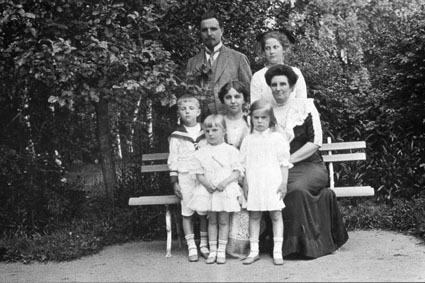
At least to the death of my grandfather Otto Gruner 1932 the families Gruner and San Galli had good contact with each other.
By 1930 she visited us in Paris. I believe, that the family Gruner was very rich. Elsa, my cousin (doughter of Adele and Ernst Gruner) allways was in St. Petersburg during hollidays. A bautyfull young girl who was not interested in us little children. Later for a long time she lived together with a very rich man, without being married. You couldn´t do thinks like that in those days! She had to marry … I don´t know no more . Otto (Gruner), Your (my) grandfather; godchild of my father Otto San Galli. I dont remember him no more. About 1924 my father visited the family Gruner in Berlin. That plain crash really was a drama! Not only, because he died (1932) so young, already a wellknown lawyer, but also he was about to get divorced by your grandmother, to marry the young gouvernante. The young, seduced? girl… that drama did shock us. Erich, the youngest son of Adele (and Ernst Gruner), who even played with us! My loved sister and me adored him. He sent us post cards. He was killed right at the beginning of war 1914 at the russian front. We little girls mourned our cousin and kept his postcards that got finally totally wrinkled for a long time. Ernie? Im no more sure about his first name, probably Ernst. He came to us to Paris. Spoke long evenings with my mother in German language about the past (she had come 1925). Me young girl visited the castle of Versailles with him. This is the result of my genealogical work on my Sangalli / San Galli ancestors by now translated in English. It was me who put all this thogether. I´ve searched in the family and got documents from people who had same ancestors 150 years ago. I´ve been in contact with people from from Poland, Russia, France, Italy, and even the USA. Surely I was in Pavia. Anybody knows more? This is what I´ve put together from several sources. Of course my English is not perfect. The German original of this site may be more exact. You want to help? Especially find out more in Pavia or Szczecin? Please contact gruner@a-gr.net . Thank you. Oh yeah. Since I have allmost been killed, I have been beginning to work for the use of better therapy after psycho trauma, ´Cause I´ve surely got it. |